


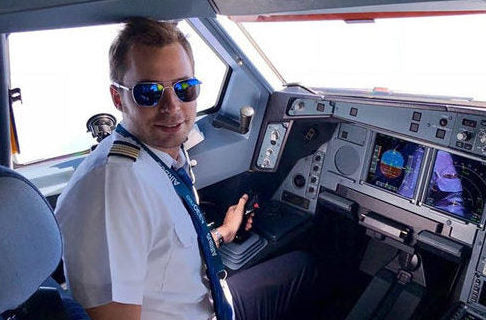
Interview with Airbus A320 / A330 Pilot David Garcia
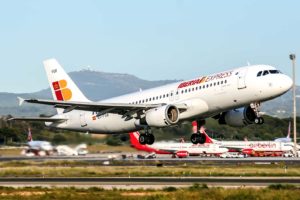
Today, we’ll take you behind the scenes once more. In fact, we’ll even take you to the flight deck in this post. We found a pilot who actually flew our Iberia Airbus A320, the EC-FGR, and interviewed him.

My name is David, I’m 35, and I’m currently an A330 instructor at one of the biggest airlines in Southwest Asia.
Yeah, I know it’s the typical answer, but I always dreamed of being a pilot - and I swear it’s true! I never thought about a plan B in case it didn’t work out... Fortunately, it did. Also, there are no other pilots in my family; I’m the only one so far.
I started my flying career in Madrid. I flew the A320 in Spain before moving to Asia, where I first flew the A320 and then the A330.
I can’t recall flying the FGR specifically, since I joined many years after it was delivered in 1991. However, I remember that this plane, along with its “batchmates” (also known as the A1 variant), had a few pressurization issues shortly after they were taken out of storage and sent to Iberia Express. This, along with the fleet renovation program, was one reason why these planes were eventually retired. However, the A320’s reliability kept them flying for more than 20 years, covering millions of kilometres across Europe and Africa.
The A330 is a “big” version of the A320. In the cockpit, they’re 90% identical. A few systems differ, such as the hydraulic system, and others are adapted to the type of operations carried out by a wide-body aircraft. Aside from that, they’re pretty much the same.
Flying in Asia isn’t much different from flying in Europe. Of course, there’s a slight cultural difference compared with flying in your own country and speaking your native language, but nothing that will stop you from enjoying yourself while doing your job! In terms of flying, there are some very interesting airports that you’re unlikely to experience when flying in Europe, such as Hong Kong, Beijing, and Sydney. But it also works the other way around, with places like the Canary Islands in Spain or the UK!
Asian passengers are very different from European passengers. Most of them are traveling for work, not vacation, so they’re quieter and hardly buy anything on board compared with European passengers. I remember that in Europe, for certain summer destinations, we had to double the amount of catering, yet everything sold out! On the other hand, Asian passengers—and this is just my personal opinion—are more appreciative, especially Japanese passengers. The same applies to Japanese ground staff servicing the plane and even to air traffic controllers: they always try to say a few words in your language.
I really enjoy flying to Seoul and Tokyo. In winter, they become challenging airports: the winds are strong, and in Seoul, it’s easy to have a foggy day, when special landing and departure procedures are enforced. Sydney is a very, very busy airport, so there’s no room for mistakes there either. I also love the new airport in Qatar; the terminal is fantastic.
Yes! Flying so many passengers leaves you with a lot of funny, not-so-funny, and weird situations! I’ve seen a marriage proposal on one of my flights, for example. The passenger coordinated with the airline, and we were advised that it might happen, so the crew was prepared. I also had a passenger who got past all the “safety barriers” and boarded the plane with a ticket to a different destination. He didn’t find out until we landed! Another nice story is that a pregnant woman gave birth on board! Luckily, we had a few doctors and some nurses on board, so everything went well. On the sad side, I also had a couple of medical emergencies where we had to divert. However, as far as we know, the passengers were stabilized and recovered.

Get yours now!


Leave a comment