

Most commercial aircraft never become famous. They do not set records, carry heads of state or make international headlines. They simply fly: day after day, year after year, as part of a much larger transport system. Airbus A320 B-6279 was one of those aircraft. It joined China Southern Airlines in 2006 and remained with the airline until 2024. Its individual career did not shape Chinese aviation. But its years in service almost perfectly frame a period in which the country’s air transport market changed on an extraordinary scale.
When B-6279 entered service, Chinese civil aviation carried just under 160 million passengers a year. By the time the aircraft was retired, that figure had risen to more than 730 million. Over the same period, the national transport aircraft fleet grew from 998 to 4,394 aircraft, while the number of certified transport airports increased from 147 to 263. B-6279 was simply one of thousands of aircraft required to keep that rapidly expanding system moving.

China was already an important aviation market when B-6279 entered service in 2006. According to the Civil Aviation Administration of China, commonly known as CAAC, the country’s airlines carried 159.678 million passengers that year, 15.5 per cent more than in 2005.
At the end of 2006, China had 998 registered transport aircraft and 147 civil transport airports. Scheduled domestic services reached 140 Chinese cities, while international routes connected the country with 91 cities in 42 countries. The network comprised 1,336 scheduled routes.
These were substantial numbers. Yet official planning documents from the period also showed where the system was reaching its limits.
Major airports were coming under increasing capacity pressure. Large parts of the country still had limited access to scheduled air services, while restricted airspace, infrastructure bottlenecks and a shortage of qualified personnel created additional challenges. In 2006, only 52 per cent of China’s county-level administrative areas were located within 100 kilometres or 90 minutes of an airport.
Those areas nevertheless accounted for 61 per cent of the population and 82 per cent of national GDP. Air transport was already concentrated around the country’s most densely populated and economically important regions.
The challenge was therefore clear: China needed more airports, more aircraft and a denser network capable of handling rapidly growing demand across an enormous national market.
By the end of 2024, China had 4,394 registered transport aircraft, more than 4.4 times the number recorded in 2006. Of these, 3,380 were narrowbody passenger aircraft, underlining the central role of single-aisle fleets in the country’s aviation system.
The airport network had expanded to 263 certified transport airports, an increase of 116 in 18 years. Scheduled domestic services reached 258 cities and regions, excluding Hong Kong, Macau and Taiwan.
The route network had grown even faster. CAAC recorded 5,334 scheduled routes in 2024, including 4,513 domestic and 821 international services. Compared with the 1,336 routes operated in 2006, the network had almost quadrupled.
Airport statistics show the scale of the change from another angle. In 2006, seven Chinese airports handled at least ten million passenger movements. By 2024, 40 airports had passed that threshold, accounting for 83.4 per cent of all passenger traffic handled by mainland China’s transport airports.
It is important to distinguish airport passenger movements from passengers carried by airlines. A traveller using a connecting service may appear more than once in airport statistics. CAAC therefore reports the figures separately: Chinese transport airports handled approximately 1.46 billion passenger movements in 2024, while the country’s airlines carried 730.2133 million passengers.
Compared directly with 2006, airline passenger numbers had grown by a factor of approximately 4.57 in 18 years. The aircraft fleet expanded at almost the same rate.
China had not simply built a larger aviation market. It had created a far denser system, with many more airports, routes, aircraft and cities connected by scheduled services.


China Southern Airlines provides a clear example of how an individual carrier expanded within this wider market.
In 2006, the China Southern Group carried 49.206 million passengers and operated 309 aircraft. Domestic services accounted for 44.225 million passengers, or almost 90 per cent of the total.
The fleet included 159 Boeing aircraft, 103 Airbus aircraft, 36 McDonnell Douglas aircraft and 11 aircraft from other manufacturers. Airbus was already an important part of the operation, but Boeing remained clearly ahead.
By 2024, China Southern carried 164.732 million passengers, more than 3.3 times its 2006 total. Its fleet had grown to 917 passenger and cargo aircraft. Domestic traffic remained the foundation of the business, accounting for 145.171 million passengers, or approximately 88 per cent of the total. That scale helps explain why single-aisle aircraft became so important. Serving a vast domestic and regional network requires hundreds of aircraft capable of operating efficiently across routes of different lengths and traffic volumes.
Airbus became increasingly significant within that system. China Southern’s Airbus fleet grew from 103 aircraft in 2006 to 415 passenger aircraft at the end of 2024: 367 from the A320 Family, 28 A330s and 20 A350s. It would still be inaccurate to describe Airbus as China Southern’s largest aircraft supplier at that point. The airline operated 442 Boeing passenger aircraft in 2024. But the balance had shifted considerably.
Official purchasing documents offer part of the explanation. In 2022, China Southern agreed to acquire 96 A320neo Family aircraft for delivery between 2024 and 2027. Its subsidiary Xiamen Airlines separately ordered another 40.China Southern stated that the order was intended to secure capacity for the expected recovery and continued development of China’s domestic civil aviation market. The airline also expected the newer aircraft to reduce operating costs per available seat kilometre, citing improvements in technology, fuel consumption, payload, range and noise emissions compared with older-generation aircraft.The order was therefore not simply about adding seats. It was also part of a broader process of fleet renewal and cost control.
No single purchase made Airbus central to China Southern. Its importance grew over many years as the group expanded capacity, replaced older aircraft and repeatedly invested in the A320 Family.
That trend continued beyond the retirement of B-6279. By the end of 2025, China Southern operated 408 aircraft from the A320 Family, compared with 393 Boeing 737s. The A320 Family had become the largest individual aircraft family in the group’s passenger fleet.
This expansion took place while Airbus was also strengthening its industrial presence in China. The manufacturer opened its Tianjin final assembly line in 2008, its first commercial aircraft final assembly facility outside Europe, and delivered the first A320 assembled there in 2009.
There is no published evidence that the Tianjin facility directly determined China Southern’s purchasing decisions. It did, however, form part of a wider environment in which Airbus steadily expanded its industrial and commercial position in China.
The most striking aspect of China’s aviation transformation is not the growth of one airport, airline or aircraft type. It is the simultaneous expansion of almost every part of the system.
Between 2006 and 2024, passenger numbers rose more than fourfold, the transport aircraft fleet expanded from fewer than 1,000 to more than 4,300 aircraft, and the country added more than 100 transport airports.
China Southern developed alongside that market. Its passenger numbers more than tripled and its fleet grew from 309 to 917 aircraft.
The continued dominance of domestic traffic is central to understanding that development. China’s international connections expanded significantly, but the overwhelming majority of passengers continued to fly within the country.
For China Southern, that made large narrowbody fleets strategically important. Over two decades, the Airbus A320 Family became one of the principal tools used to provide that capacity — not through one defining decision, but through repeated expansion and fleet renewal.

B-6279 did not transform Chinese aviation. It was one of the many aircraft that kept the system moving while the market around it changed dramatically.
When it entered service in 2006, China Southern operated 309 aircraft. By the end of its active career in 2024, the group had grown to 917.
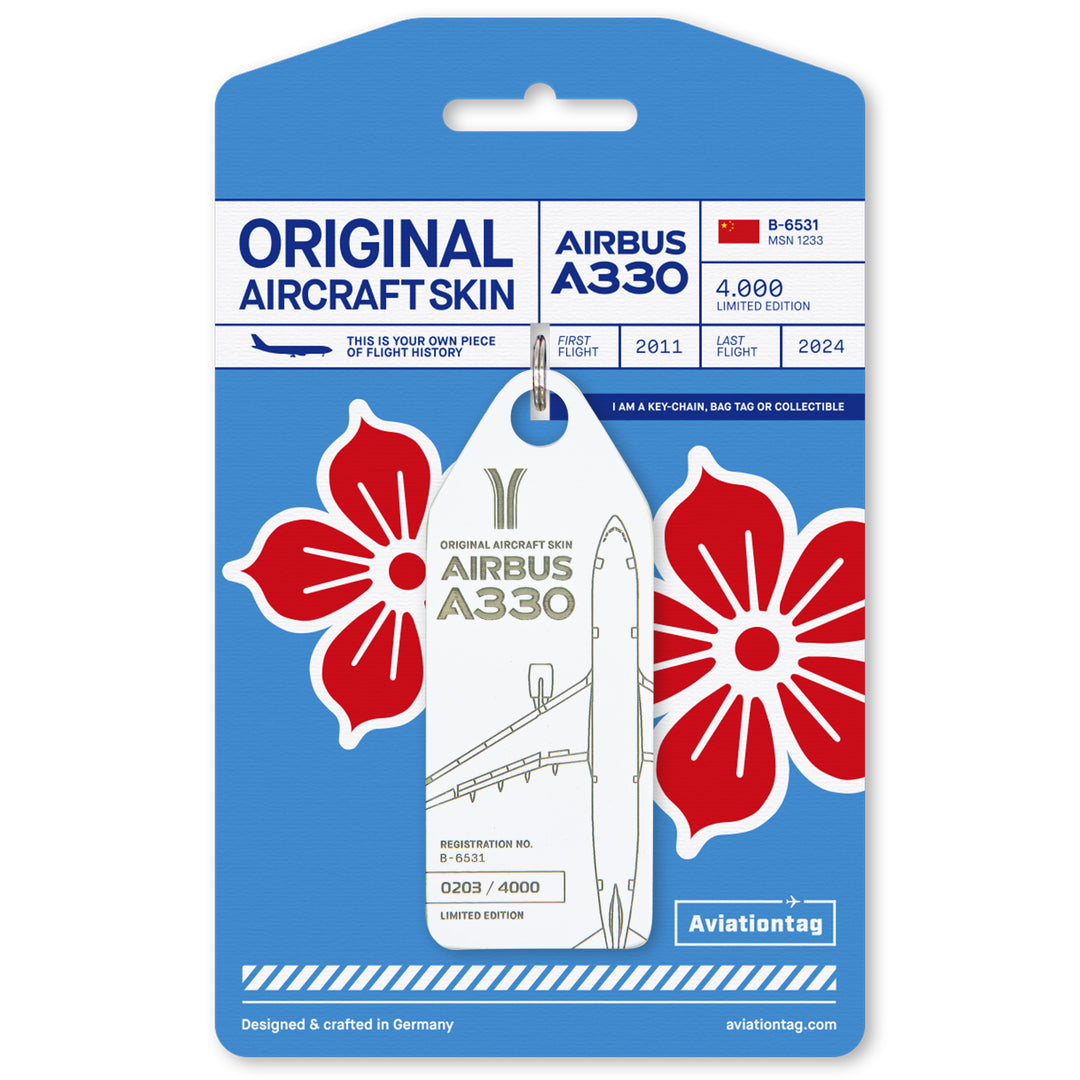
After its retirement, B-6279 was transferred to Kuala Lumpur for final dismantling and recycling. Selected sections of its original aircraft skin were secured by Aviationtag and given a new purpose.
What remains is not a piece of a famous record-breaker, but something more representative: original material from one of the working aircraft that served throughout an exceptional period in Chinese aviation.
For almost 18 years, B-6279 was part of that story. Today, a small and individually numbered fragment of the aircraft continues its journey as an Aviationtag.